

Underground Copper Mine: Asset Optimisation Project
Shivaan Asset Management supported a top miner in improving copper output and equipment reliability.
Mining1,849Specific maintainable items assessed
Manufacturing
Shivaan Asset Management combined operating data, field observations and frontline expertise to improve grinding-circuit stability and retain critical mill knowledge.
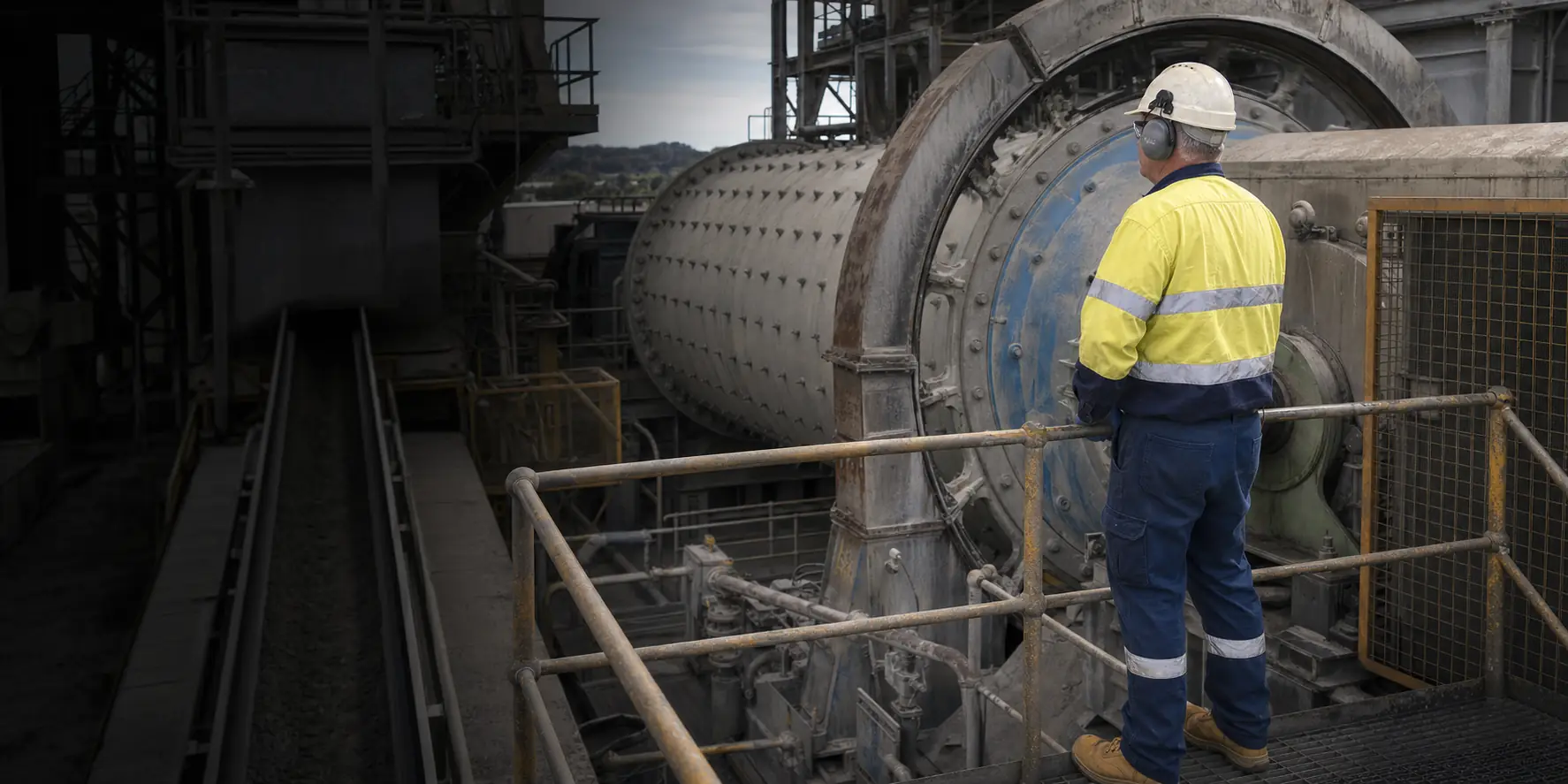
The client wanted to make better use of installed grinding capacity without compromising product quality, equipment integrity or operating safety. Shivaan Asset Management approached the engagement as a whole-system performance review rather than a narrow equipment study.
The review examined where scheduled production time and grinding rate were being lost, compared stable and unstable operating periods, walked the circuit with operators and trades, and tested whether formal procedures reflected how the equipment actually behaved.
One experienced fitter demonstrated a highly developed ability to recognise changes in the mill through its acoustic behaviour. He did not rely on sound alone. He listened for movement away from a known baseline, checked operating context with the control room, and observed how the circuit responded to controlled changes.
Installed capacity was available, but stable and repeatable use of it was not. The mill could hold a strong rate under some conditions, yet require intervention, produce higher rejects or become less predictable under others.
A closed-circuit cement ball mill is not controlled by one variable. Feed rate, material characteristics, grinding-media condition, motor power, ventilation, outlet temperature, grinding-aid dose, separator performance, reject return and downstream storage conditions interact.

The investigation used a simple evidence path that operating, maintenance, process and management teams could all follow.
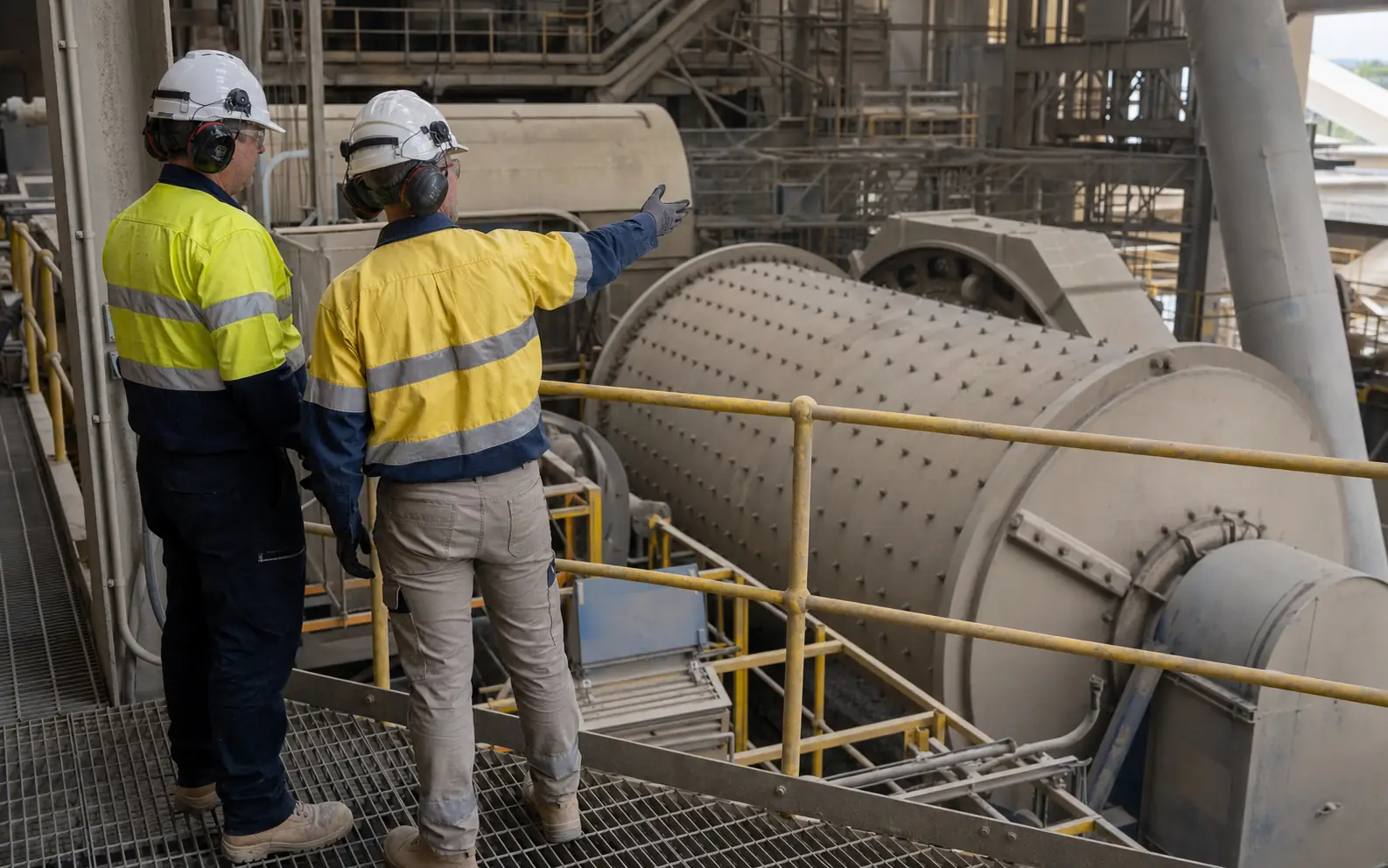
During the interviews, one experienced fitter indicated that the mill was already communicating much of what the team wanted to understand. At a safe observation point beside the operating equipment, he asked a Shivaan Asset Management consultant to listen.
The fitter recognised a change from an internal baseline developed through years of exposure. He then asked the control room for the operating information that gave the sound context, including outlet temperature, motor power and the current circuit condition.
What appeared at first to be intuition was a disciplined, experience-built decision process. Its weakness was not the quality of the judgement. It was that the process existed almost entirely in one person's memory.
Shivaan Asset Management treated the fitter's judgement as a high-value engineering hypothesis rather than a conclusion. The next planned outage and media recharge created a useful calibration point.
The project established a practical distinction between a signal and a diagnosis. The expertise was in understanding how several signals moved together, what had changed beforehand and what physical condition was later confirmed.

How FMECA and RCM combine into an integrated maintenance strategy
The trends were used as a P-F-style decision map. Detectable drift meant a repeatable move away from the known-good relationship. The functional limit was the site-defined point at which throughput, product quality, process stability or wear would no longer remain acceptable.
A local mill decision could shift a bottleneck, increase risk or create idle time elsewhere. The response therefore considered the bucket elevator and reject-return path, fresh feed, storage buffers, silo filling, dispatch and relevant upstream conditions.
Only observed and tested relationships moved into shared guidance or controls work. Site implementation still required locally engineered setpoints, controls review, risk assessment, management of change, operator override provisions and commissioning.
The outcomes are presented qualitatively to protect client confidentiality and avoid overstating precision where historical records were not structured for formal before-and-after attribution.
The client wanted to improve effective utilisation of an operating closed-circuit ball mill by understanding downtime, low-rate operation, reject behaviour and decision variability, without compromising product quality, equipment integrity or safe operating limits.
No. Acoustic change was an initial cue that the mill had moved away from a known baseline. It was interpreted with motor power, outlet temperature, feed condition, separator response, recent operating changes and continued physical inspection.
Shivaan Asset Management captured the experienced fitter's decision logic, established a post-recharge baseline, compared observations with operating trends, built visible decision aids and continued checking the relationships against internal inspections.
It provided a governed early-warning and planning window between detectable drift from the known-good relationship and a site-defined functional limit. It was not presented as a precise remaining-life prediction.
Within the following three months, operators reported fewer rejects and steadier mill operation. Maintenance and process teams gained greater confidence in media recharge and wear planning, and the plant reduced dependence on one person's undocumented knowledge.
Two reasons. The plant's historical records were never structured for a formal before-and-after comparison, so a precise percentage would imply a rigour the source data cannot support. And publishing hard figures would risk identifying a confidential client. Reporting the change qualitatively is the honest reading of what the evidence allows.
Shivaan Asset Management supported a top miner in improving copper output and equipment reliability.
Mining1,849Specific maintainable items assessed

Shivaan Asset Management was contracted to perform a complete audit of the CHPP functional locations across both sites.
Mining60% fasterProject delivered faster than the traditional Excel spreadsheet method
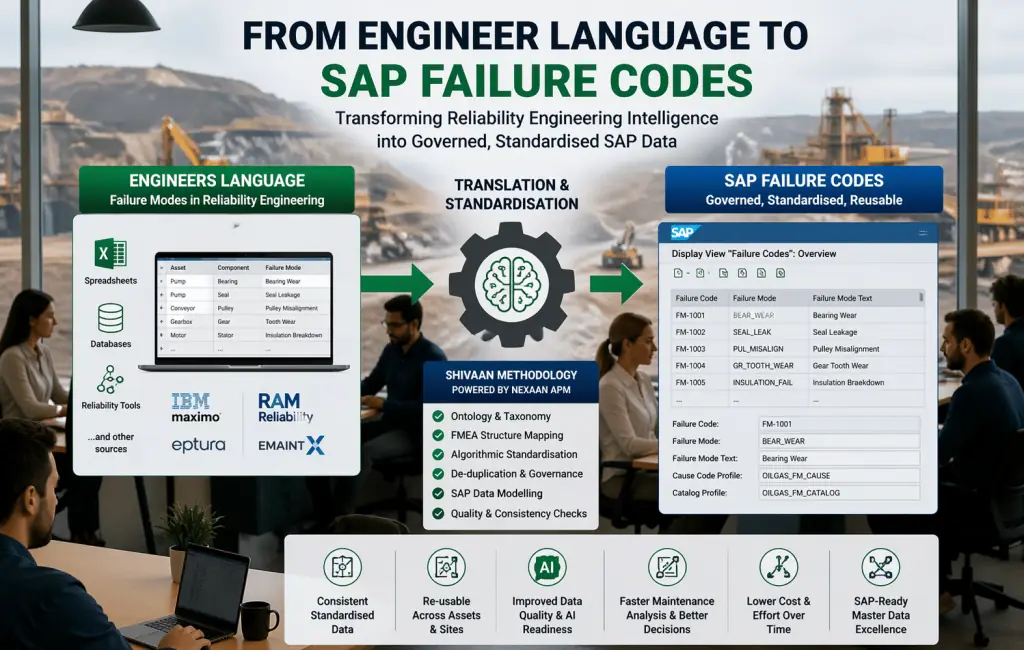
Shivaan Asset Management delivered SAP compliant failure codes (catalog profiles) for a Tier 1 oil and gas client, across 5 asset classes and 44 asset class types in 8 weeks.
Oil and Gas8 weeksTime to delivery
Experienced operators and trades often recognise changes before they appear in formal reporting. Shivaan Asset Management helps capture, test and embed that knowledge so decisions become repeatable, governable and less dependent on one person.